How to Frame Out a Shipping Container Home: Design, Construction & Interior Framing Guide
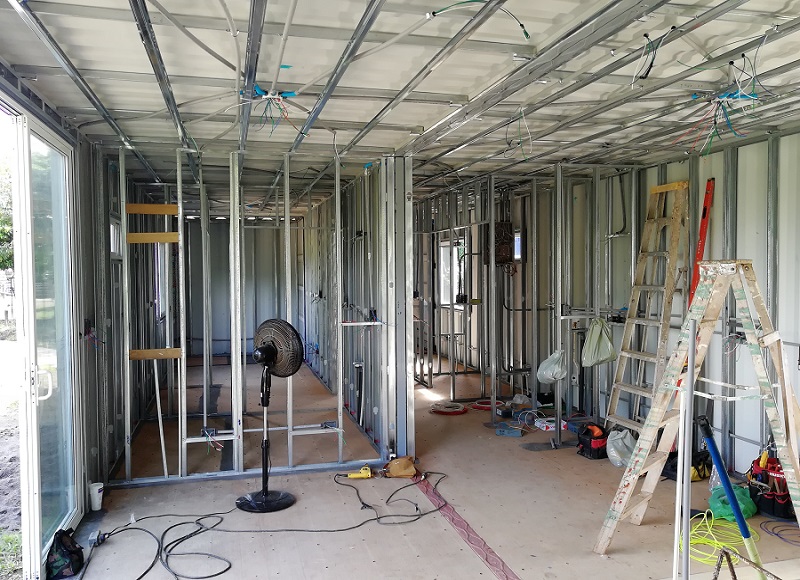
How to Frame Out a Shipping Container Home: Design, Construction & Interior Framing Guide
The Complete Guide to Shipping Container Home Framing in Costa Rica
Building a shipping container home is one of the most exciting and cost-effective housing decisions you can make — especially in Costa Rica, where the tropical climate, land availability, and growing expat market make container homes an increasingly popular choice. But before you can enjoy your finished interior, there is one critical construction step that determines everything that comes after: the frame out of your shipping container home.
At ContainerHomes.net, we have been designing and building shipping container homes in Costa Rica for over 20 years. In that time, we have framed out dozens of container homes, offices, commercial spaces, and eco-lodge units across the country — from Guanacaste and Tamarindo to the Southern Zone and the Central Valley. This guide shares exactly what we have learned about interior framing, which materials work best in the tropics, and how to make the right decisions for your specific build.
What Is Container Home Framing — and Why Does It Matter?
Framing a shipping container home means installing an internal structural framework on the interior walls of the container before you install wallboard, insulation, electrical conduit, plumbing, or any other interior finish. Think of it as the skeleton behind your finished walls.
Here is why it matters: when you install wallboard (also called drywall, gypsum board, or fibrolite in Costa Rica), you need something solid to screw or nail into. Without an internal frame, you would be drilling directly through the wallboard and into the corrugated steel walls of the shipping container itself. That means thousands of holes in your container — holes that let in moisture, insects, and humidity, all of which are particularly damaging in a tropical climate like Costa Rica’s.
The frame out solves this problem entirely. It creates a secondary interior wall structure made of metal strips, wood posts, or aluminum — giving you solid anchor points for wallboard, insulation, light switches, outlets, cabinetry, and every other interior element of your container home.
Do You Always Need to Frame Out a Shipping Container Home?
Not necessarily — and this is an important distinction that many container home guides overlook.
At ContainerHomes.net, we have built units where no interior framing was required at all. This is most common in:
- Container offices and commercial spaces where a raw industrial interior look is intentional and functional
- Storage and utility builds where interior finish is not a priority
- Specialty builds where the client specifically wants to leave the container walls exposed for aesthetic reasons
We completed one notable container home project in Costa Rica where the client chose not to install wallboard or insulation. In that case, framing was unnecessary — and removing that step saved both time and money. The interior had a raw, industrial aesthetic that the client loved, with the corrugated steel walls left fully visible.
However, for the vast majority of residential container homes — especially those being built for comfortable year-round living in Costa Rica’s tropical climate — interior framing is essential. You will need it for:
- Wallboard and interior wall finish installation
- Insulation (critical for thermal comfort in Costa Rica’s heat)
- Electrical wiring, outlets, and switch boxes
- Plumbing runs where they run along walls
- Kitchen and bathroom cabinetry mounting
- Air conditioning unit installation
The 3 Framing Materials We Use at ContainerHomes.net
Over 20 years of building container homes in Costa Rica, we have tested and refined our approach to interior framing materials. The tropical climate here — high humidity, heavy rainfall, insects, and temperature variation — demands materials that perform differently than what works in the United States, Canada, or Europe. Here is what we use and why:
- Steel Metal Strips (Our Preferred Method in Costa Rica)
Steel framing strips are our top recommendation for container homes built in Costa Rica’s tropical climate, and they are what we use most frequently on our builds.
How it works: We use thin, flat metal strips and weld them directly to the inside of the shipping container walls. These strips create anchor points running horizontally and vertically across the container’s interior, onto which fibrolite board (a cement-based wallboard that resists moisture and insects) is attached.
Why steel strips work best in the tropics:
- Humidity resistance: Steel does not absorb moisture, swell, warp, or rot — all critical concerns in Costa Rica’s rainy season
- Pest resistance: Unlike wood, steel strips provide zero food source or habitat for termites, carpenter ants, or other wood-boring insects that are common in Central America
- Structural integrity: Welding creates a permanent, rigid bond with the container wall — there is no risk of the frame shifting, loosening, or separating over time
- Longevity: A steel-framed container home interior in Costa Rica will last decades without maintenance or replacement
The combination of metal strips, fibrolite board, and steel container walls creates one of the most durable, tropical-climate-appropriate interior assemblies we know of.
- Wood Posts — 2″x2″ Lumber
Wooden interior framing is the most familiar method for builders coming from a North American construction background, and it can work well in Costa Rica under the right conditions.
How it works: We use 2″x2″ wood posts, wedged firmly into position against the container walls. Rather than heavy nailing — which can split thinner posts and create weak points — we secure them using Duritan construction adhesive, a high-strength bonding agent that grips both wood and steel effectively. A minimal number of nails are used for initial positioning while the adhesive cures.
When we use wood framing:
- When the client requests it specifically due to familiarity or preference
- In drier interior regions of Costa Rica where humidity levels are lower
- For interior partition walls that are not in direct contact with the outer container skin
- For builds with aggressive timelines where welding equipment is not immediately available
Important note: If you choose wood framing for a container home in a coastal or high-humidity area of Costa Rica — such as Tamarindo, Manuel Antonio, Nosara, or the Southern Zone — we strongly recommend treating all lumber with a borate-based termite and moisture treatment before installation. Untreated wood in these environments can show signs of pest damage or moisture absorption within just a few years.
- Aluminum Framing
Aluminum is our third framing option and sits between steel and wood in terms of cost, weight, and ease of installation.
How it works: Aluminum framing channels are fastened to the container walls using self-tapping screws or construction adhesive. The lightweight nature of aluminum makes it fast to install and easy to cut and shape on-site.
Advantages of aluminum in container home construction:
- Completely rust-proof — ideal for oceanfront or high-humidity locations
- Lightweight, reducing the overall load on the container structure
- Easy to work with using basic tools — no welding required
- Resistant to termites and pests
Disadvantages: Aluminum is generally more expensive than wood and slightly less rigid than welded steel strips over large spans. For interior partition walls and areas that will not carry heavy loads, aluminum is an excellent choice.
Structural Considerations: Cutting Openings in Your Container
One of the most important structural topics in container home construction is what happens when you cut openings into the container walls. Whether you are creating windows, doors, pass-throughs, or removing an entire wall to join two containers side by side, every cut must be carefully engineered.
The fundamental rule: The weight of the steel you remove must be replaced — matched — by the weight and strength of the structural support you install around the opening.
This is not a guideline — it is a structural engineering requirement. Shipping containers are designed to carry enormous loads at their corner posts and along their top and bottom rails. When you cut into the corrugated sidewalls, you interrupt the load path that the container was engineered to handle.
This becomes especially critical when:
- You plan to stack a second container on top of the first
- You are building a rooftop deck that will carry people, furniture, or equipment
- The opening is large — wider than approximately 6 feet
- You are removing an entire side wall to create an open-plan living space
In these situations, steel header beams (also called lintel beams) must be welded above every opening, and vertical support columns may be required at the sides. The beam sizing must be calculated based on the load it will carry — a job that requires either an experienced container home builder or a licensed structural engineer.
At ContainerHomes.net, all of our builds that involve significant structural cuts are reviewed by our engineering team before cutting begins. This protects our clients’ safety and ensures the build meets Costa Rica’s CFIA (Colegio Federado de Ingenieros y Arquitectos) structural standards.
Ready to Build Your Container Home in Costa Rica?
With 20 years of experience building container homes across Costa Rica — from Guanacaste to Dominical, San Ramón to the Nicoya Peninsula — ContainerHomes.net brings the expertise, materials knowledge, and on-the-ground experience to deliver your build correctly the first time.
Whether you are planning a simple single-container home, an off-grid retreat, a multi-container family residence, or a commercial container project, we offer:
- Free consultations on design, framing, and materials
- Full turnkey builds from design through delivery
- DIY support and consulting for owner-builders
- Builds starting at $35,000, delivered in 90 days
Contact us today at ContainerHomes.net or reach us on WhatsApp to get your free quote.